NPC–SS Brings Security Personnel and Journalists for a Dialogue Workshop in Rumbek
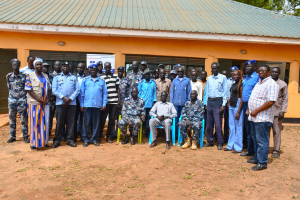
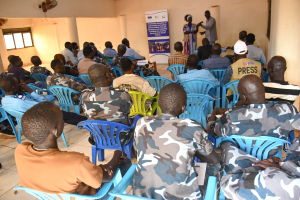
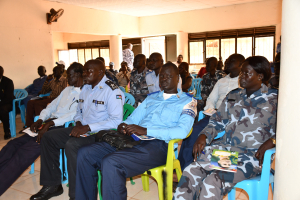
The National Press Club–South Sudan (NPC–SS) held a two-day dialogue workshop in Rumbek, Lakes State, on October 1–2, 2026, bringing together security personnel and journalists to strengthen cooperation, promote freedom of expression, and improve journalists’ safety.
Held under the theme “Promoting Freedom of Expression and Safety of Journalists through Advocacy and Capacity Building for Security Personnel in South Sudan,” the workshop brought together at least 32 security personnel from various police departments, the National Security Service, and the South Sudan People’s Defense Forces, alongside at least ten journalists from media houses operating in the state.
Facilitator Mr. Paul Jimbo led sessions on freedom of expression, access to information, South Sudan’s media laws, communication with the media during high-pressure situations, conducting media interviews, and protecting journalists during public order events. Using a participatory approach, the sessions encouraged open discussion, shared learning, and collective reflection on the responsibilities of both security personnel and journalists.
Police Spokesperson and Assistant Facilitator Lt. Col. Elijah Mabior emphasized the constitutional responsibilities of security personnel, reminding participants: “Your mandate is to protect the communities and their properties.” His sessions highlighted the shared purpose of security personnel and journalists as members of the communities they serve. As one participant observed, “Both security personnel and journalists are members of the community, and they are all working for the good of the country.” These discussions helped reinforce mutual respect and the importance of cooperation.
Speaking at the workshop, the Director General of Information and Communication, Hon. Moses Malok, underscored the connection between the two professions. “You have to know that your work has a link; you have different constitutional duties, but they are all for the good of the country,” he said. Hon. Malok thanked NPC–SS, UNESCO, and JICA for the initiative and called for more media-related capacity-building workshops in Lakes State, citing what he described as extremely low levels of media literacy.
Brig. Gen. Marial Akol Pel said the workshop had equipped participants with valuable knowledge to improve relations between security personnel and journalists. “This workshop will be very helpful to us. Also, the way Paul brought us through the two days has been remarkable,” he said. Representing journalists, Mr. Peter Machuei called on relevant authorities to provide timely access to information, emphasizing that journalists need access to the information they seek to report fairly and accurately.
He also urged his colleagues to produce fair and balanced stories. Expressing concern about the proliferation of unregulated social media platforms operated by people without journalism training, he called on the relevant authorities to address the issue. He further requested training in gender-sensitive reporting, conflict reporting, and peace journalism. Mr. Albino Akec, representing security personnel, thanked the partners for creating a platform for direct engagement between security institutions and the media. Describing the approach as unique, he pledged to protect journalists. “We can have peace if we protect them,” he said.
This workshop builds on a UNESCO-led Training of Trainers held in Juba in June 2026 and was supported by JICA South Sudan. Through continued dialogue and practical cooperation, NPC–SS and its partners are working to strengthen relationships between the press and security institutions and foster a safer environment for journalism in South Sudan.