NPC–SS Strengthens Media–Security Relations in Malakal
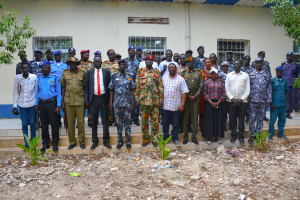
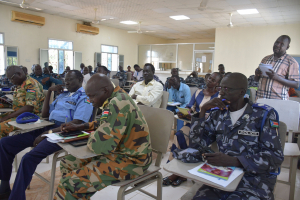
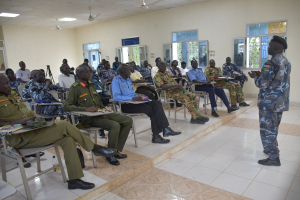
The National Press Club–South Sudan (NPC–SS) held a two-day workshop in Malakal, Upper Nile State, on October 7–8, 2026, to strengthen security-media relations in the state ahead of the December polls.
Fixed on the theme “Promoting Freedom of Expression and Safety of Journalists through Advocacy and Capacity Building for Security Personnel in South Sudan,” the workshop brought together 30 security personnel from various police departments, the National Security Service, and the South Sudan People’s Defense Forces, alongside two members from the Ministry of Information and eight journalists working for various media houses in the state.
Mr. Paul Jimbo, media consultant and trainer, facilitated sessions on freedom of expression, access to information, South Sudan’s media laws, communication with the media during high-pressure situations, conducting media interviews, and protecting journalists during public order events. Using a participatory approach, the sessions encouraged in-depth discussions, shared learning, and collective reflection on the responsibilities of security personnel and journalists.
Police spokesperson and assistant facilitator, Lt. Col. Juma Pur Deng, led discussions on the boundaries and limitations of freedom of expression, noting that “there are certain limits to freedom of expression.” His sessions highlighted the limitations governing the work of both security personnel and journalists, addressing areas with which many participants were previously unfamiliar.
Speaking at the workshop, the Director General of the Ministry of Information and Communication, Hon. Chol Kur, underscored the shared role of journalists and security personnel in nation-building. He emphasized the importance of journalism in the electoral process, stating, “Elections need a lot of work; journalists are highly needed.” However, Hon. Chol noted that unregistered media platforms were operating in the state, saying the ministry is making efforts to address the issue to protect the public from misinformation. Comparing the power of information to that of a gun, he stressed that information should be based on facts. Chol thanked NPC–SS, UNESCO, and JICA for supporting the initiative and called for more capacity-building workshops in the state.
Meanwhile, the State Police Commissioner, Lt. Gen. Louis Gatkuoth, described the workshop as timely. He appreciated the approach of bringing journalists and security personnel together to engage in dialogue on issues that often affect their work. Gatkuoth urged security personnel to take the knowledge gained seriously and put it into practice, while calling on journalists to maintain professionalism and uphold ethical standards. He also thanked the partners for choosing Malakal and requested that personnel who missed the opportunity be considered for future training.
Representing the journalists, Mr. Johnson Amum emphasized the significance of the workshop, noting that it was the first time that journalists and security personnel were brought together in such a setting. He said the engagement helped build mutual knowledge and understanding, adding, “Now we shall be able to work without restrictions.”
Similarly, Maj. Gen. Malek Bol, who represented the security personnel, said participants had benefited greatly from the workshop, particularly by learning things they had not known before. “We have benefited a lot, things that we did not know before,” he said. “The workshop has helped everyone to know their position as well as the common space.”
Maj. Gen. Bol added that the training had better prepared journalists and security personnel to cooperate in their respective duties by helping them understand their differences as well as areas of shared responsibility.
The workshop builds on a UNESCO-led Training of Trainers held in Juba in June 2026 and was supported by JICA South Sudan. NPC–SS is working closely with partners and media institutions to strengthen relationships between the press and security institutions, fostering a safer environment for journalism in South Sudan.